


Ferdowsi Treatment Unit
Related Departments
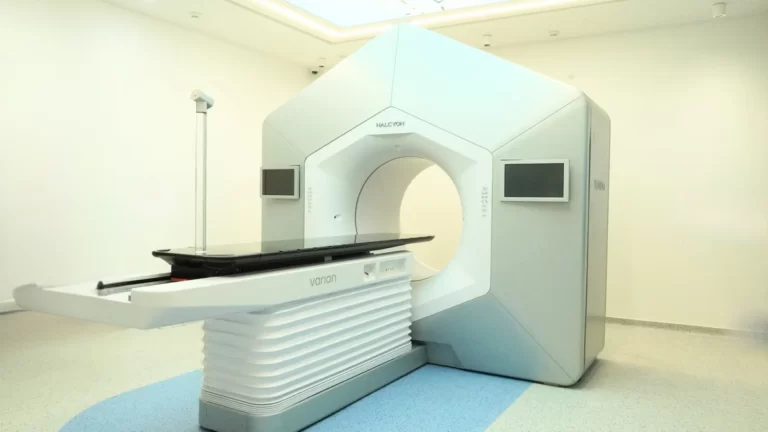
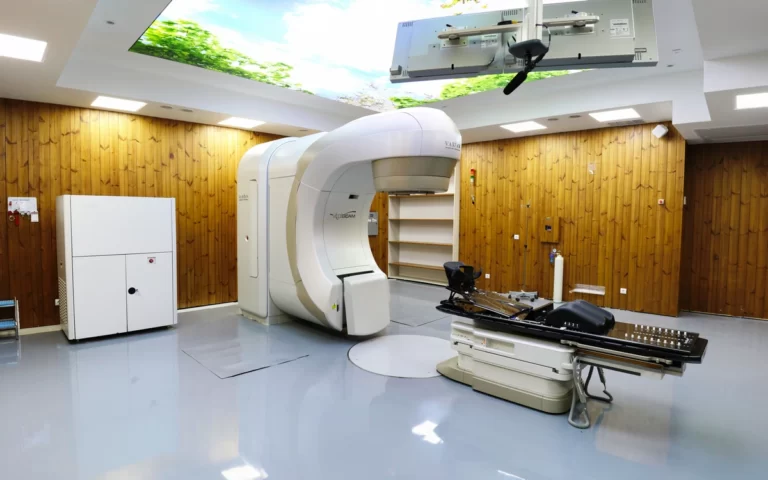
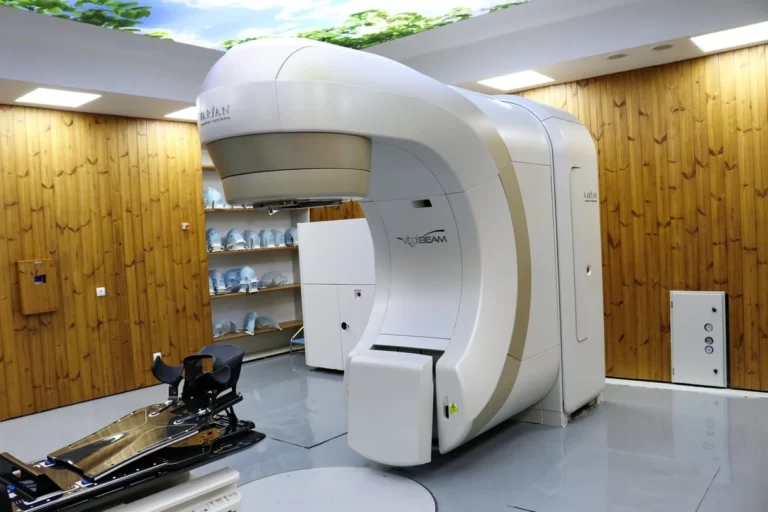
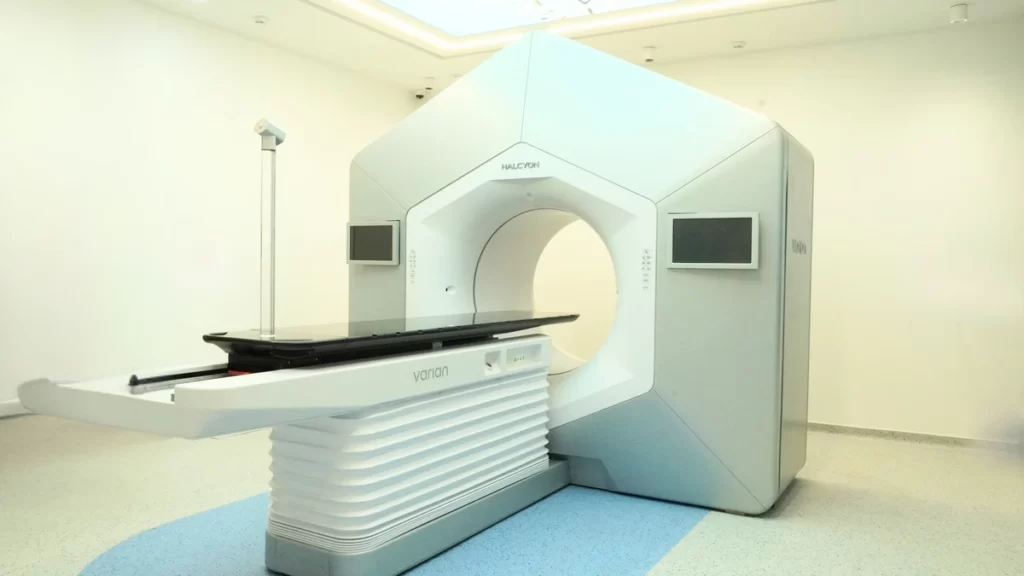
The Halcyon system is a next-generation radiotherapy platform designed and engineered to streamline and enhance the efficiency of oncology treatments. Focusing on patient comfort and delivery accuracy, this advanced system offers an optimized radiotherapy experience for both patients and clinical teams.
Key features and benefits of the Halcyon system:
Patient-centric design: Halcyon is engineered with patient comfort in mind. A more spacious bore opening, reduced operating noise, and smooth, fast couch movement significantly help reduce patient anxiety and improve comfort during treatment fractions.
Streamlined treatment workflow: The system automates and simplifies many complex radiotherapy steps. This leads to shorter setup times, faster treatment sessions, and higher patient throughput throughout the day.
Advanced imaging quality: Halcyon is equipped with an integrated high-speed imaging system, enabling precise verification of tumor location prior to each treatment delivery. This feature maximizes radiation targeting accuracy and spares adjacent healthy tissues.
High speed and efficiency: A primary advantage of Halcyon is its fast dose delivery rate. This not only shortens treatment times per session but can also contribute to improved clinical outcomes.
Enhanced safety: Built-in safety features and automated processes help minimize human error and elevate overall treatment safety.
Versatility for diverse treatment modalities: The system supports advanced radiation therapy techniques, including intensity-modulated radiotherapy (IMRT) and volumetric modulated arc therapy (VMAT), making it suitable for treating a broad range of malignancies.
Halcyon: A step toward the future of radiotherapy:
By combining technological innovation with user-centric design, the Halcyon system enables cancer centers to provide high-quality, efficient, and patient-centered radiation therapy services. This technology reflects an ongoing commitment to advancing cancer management and improving patient quality of life.
Clinic HoursFerdowsi Treatment Unit
Phone Number
Telegram
Lorem ipsum dolor sit amet, consectetur adipiscing elit. Ut elit tellus, luctus nec ullamcorper mattis, pulvinar dapibus leo.
Why Halcyon?
Photo GalleryFerdowsi Treatment Unit
Related PhysiciansFerdowsi Treatment Unit
Related InsurancesFerdowsi Treatment Unit
Most of us have had a computed tomography (CT) scan. The entry and exit of low-energy X-rays used in CT imaging cannot be felt by our senses. Similarly, the higher-energy radiation beams used in therapeutic treatments are imperceptible to humans. For this reason, patients undergoing treatment on our radiotherapy machines do not feel much during the session.
Radiation therapy is most commonly delivered using external beam radiation therapy machines, where patients remain still while the radiation source rotates around them. Because the radiation beams travel into and out of the body at the speed of light during this process, they do not accumulate in the body, meaning there is no risk of exposing or contaminating family members. In brachytherapy (internal radiation therapy), which is another therapeutic modality, devices are used to guide radioactive sources into body cavities such as the uterus or directly into tissues. Once these applicators are placed, the radioactive source travels to the target area to deliver the radiation dose. The radioactive source is then retracted and removed. After the device is removed, the patient is discharged home. Because no residual radiation remains in the patient's body following these treatment procedures, there is no radiation exposure risk to their relatives.
What preparations are required before radiotherapy? Patients may present for radiation therapy at various stages of their care. In some cases, completing pending diagnostic evaluations may be necessary before beginning treatment. Prior to initiating radiotherapy, a radiation oncologist explains why the treatment is indicated. Similar to surgical planning, most radiotherapy regimens target either an entire organ, a specific anatomical region, and occasionally the lymphatic drainage basins associated with that organ. Therefore, preparation requirements vary depending on the anatomical site being irradiated. For example, preventive oral and dental evaluations are recommended before radiotherapy for patients preparing for head and neck irradiation. For patients receiving lower abdominal or pelvic radiation, specific bladder and rectal filling or emptying protocols may be established. Furthermore, because complete blood counts are clinically relevant throughout radiation therapy courses, routine blood work may be ordered before treatment starts.
Yes, there are. Although patients do not feel much while on the treatment machine during radiation delivery, side effects can still develop depending on the anatomical regions being treated, and these may be observed during and after the course of radiotherapy.
Radiotherapy is a modality of treatment that utilizes ionizing radiation. In fact, radiation—the transmission of energy through space—is already a familiar concept in daily life. Today, numerous devices such as mobile phones, television antennas, GPS systems, and radios operate on the principle of wireless energy transmission. The specific radiation beams utilized for medical treatment are referred to as radiotherapy or radiation therapy. The rays used in radiotherapy are ionizing, meaning they have the capacity to induce damage in DNA, the human genetic material. Delivered radiation induces damage in both tumor DNA and the DNA of adjacent normal tissues. While malignant cells generally lack the capacity to effectively recover from radiation-induced cellular damage, healthy tissues retain the ability to repair this damage. Based on this radiobiological principle, radiation has been successfully applied in therapeutic medicine since its initial discovery in the 1890s.